
 By Adam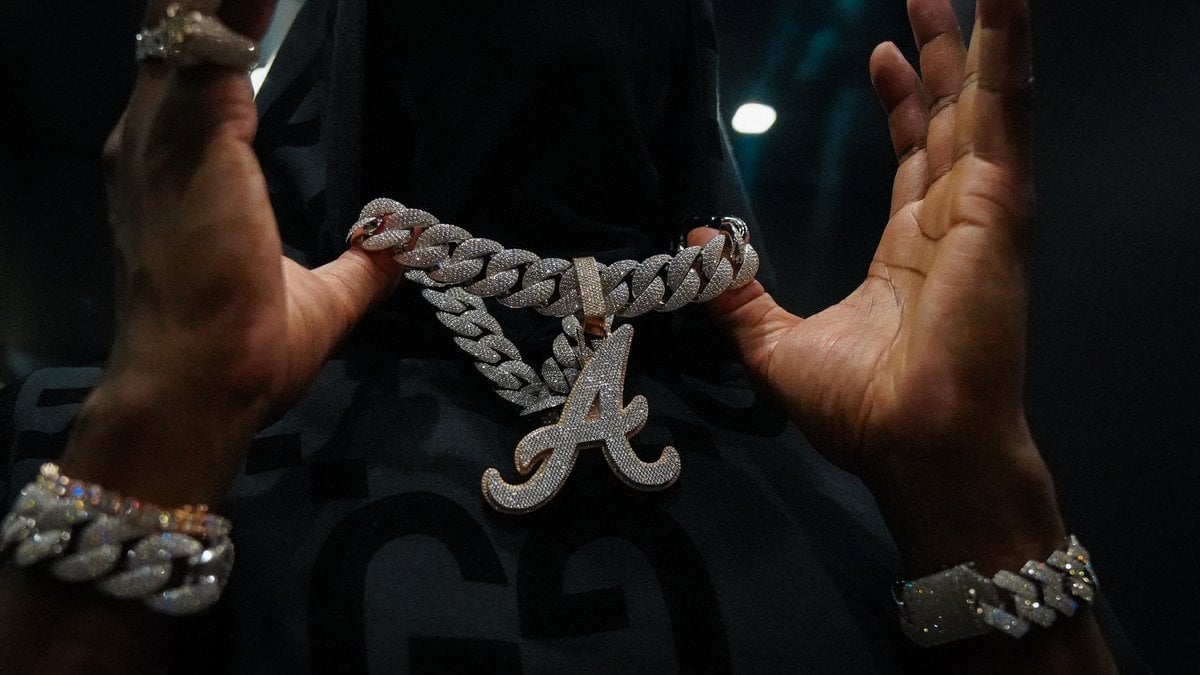
A solitaire ring asks one stone to look right. A fully iced Cuban link asks the same of hundreds of stones at once, plus every prong, link and gap between them. That difference in scale changes what quality means, and it explains why stone-heavy jewelry exposes small mistakes that a single-stone piece can hide.
Much of Miami The Jeweler’s catalog sits at the large end of that scale. The downtown Miami shop’s collections include tennis chains, Cuban prong chains, Miami Cuban chains, spike tennis chains, bracelets and iced pendants, with the core moissanite line built on VVS1, D-color stones set in 925 sterling silver. Founder Samuel Madrid treats consistency as the core problem those pieces have to solve.
Small flaws multiply
On a ring, a stone that sits a fraction too high is one stone. On a tennis chain, a setter who lets heights drift a little produces a row that rises and falls along its length. The eye reads that as a wobble before it can name the cause. Any variable that wanders on one stone wanders on the next hundred unless someone controls it.
Six variables do most of the work on a stone-set chain: stone color, stone size, alignment, spacing, prong shape and setting height. When all six hold steady, a chain reads as a single band of light. When two or three drift, the piece looks assembled rather than designed.
Color has to match from end to end
On the color scale the diamond trade uses, D, E and F all fall in the colorless range. The differences between them are subtle on a single stone. MTJ has found through its own sourcing and production experience that using D-color moissanite exclusively gives its chains and iced pieces the crisp, colorless and uniform look the shop wants across the entire piece.
That is a production choice, not a law of gemology. The reasoning is practical. A chain shows dozens of stones next to each other, and side-by-side viewing makes small differences easier to notice than they would be in isolation. Holding every stone to one color grade removes a variable before setting begins.
The same logic applies on the diamond side, where MTJ sets natural and lab-grown diamonds in solid 10K, 14K or 18K gold. Building a large piece from many diamonds means sorting them for color and size so the finished piece reads as one surface.
Size, alignment and spacing
Stones in a row need to match in diameter. A stone slightly larger than its neighbors stands proud of the line, and a smaller one leaves a visible dip. Alignment covers the direction each stone faces; a stone tilted a few degrees throws light at a different angle and flashes out of step when the chain moves. Spacing covers the gaps, which should look even down the whole length.
Chains add a complication rings do not have: movement. A chain flexes at every link when you wear it. Alignment that looks fine on a chain laid flat on a tray can fall apart when the chain drapes around a neck. Good execution holds up in both positions.
Prongs and height, repeated
MTJ focuses on precise setting with small, clean prongs that hold each stone without letting metal crowd it. On a long piece, prong consistency counts as much as prong size. Matching prongs keep stones at matching heights, and matching heights keep the surface flat and bright. Spike tennis chains and iced pendants raise the stakes further, because their shapes catch light from more angles.
Pendants add a second dimension to the problem. A flat or domed pendant face covered in stones has to read as an even surface from every direction, so a single stone set low creates a visible pit, and a high one breaks the outline.
Scale is the goal
Madrid’s ambitions run large. “I want to ice out the whole world,” he says. Reaching for that means producing a large number of fully stone-set pieces, and each one brings the same consistency problem with it. A shop that wants to put iced pieces on customers around the world has to solve that problem on every chain it releases.
For buyers, moissanite makes those large, heavily stone-set designs reachable at a fraction of the cost of an equivalent natural diamond piece. That accessibility only means something if the execution keeps up with the stone count.
How to judge consistency in person
Lay the piece flat under daylight and look down its length for color shifts, size jumps or uneven gaps. Then pick it up and let it hang. Check whether stones stay aligned as the links move. Tilt it back and forth and look for any stone that flashes out of rhythm with the rest. Photos and videos help, but a long chain shows its consistency best in your hand.
Those checks are easiest in a showroom. Miami The Jeweler’s is at 22 NE First St, Suite 225, Miami, FL 33132, and the full chain lineup is at miamithejeweler.com.
SME Paid Under
 Full Editorial
  Profitable News
  Chris Turn