
 By Adam
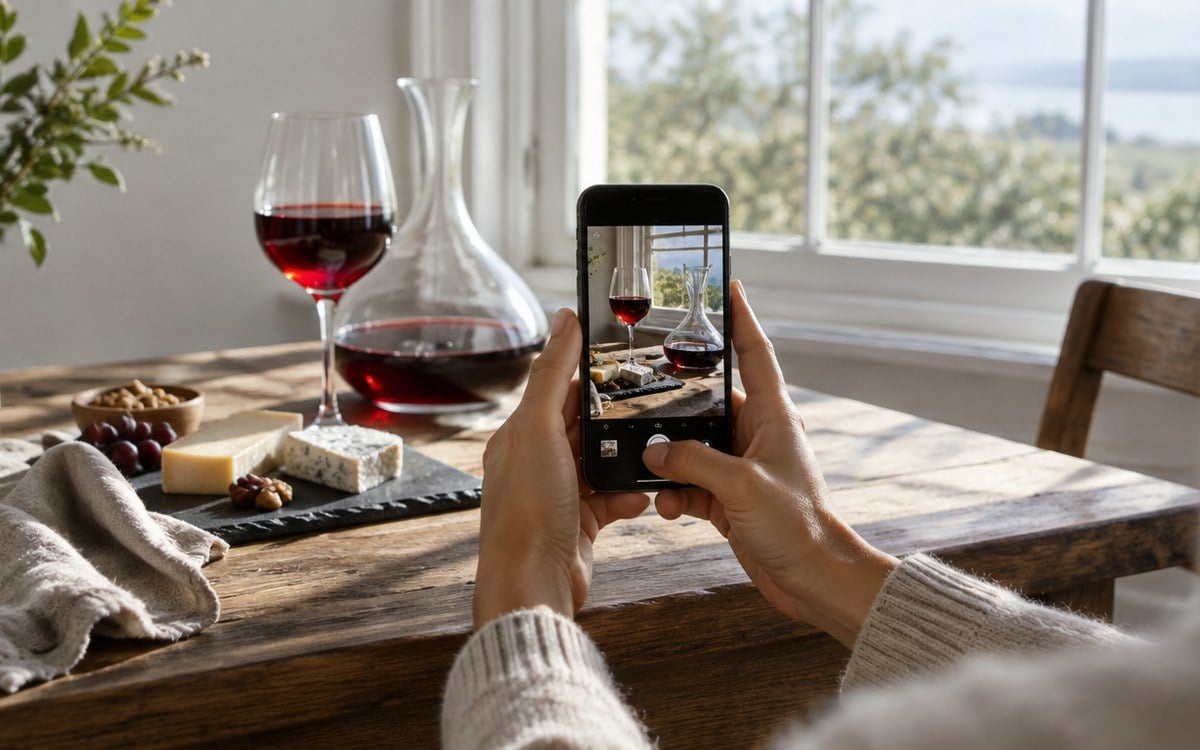
Wine is one of the easiest subjects to photograph badly. The bottle glares, the glass reflects your phone, red wine turns black in low light, and the table looks cluttered. Restaurants, wineries and home cooks who post wine content run into the same problems. The fixes are cheap and fast.
Shoot near a window
Natural side light suits wine better than anything else. Set the table near a window and turn off overhead bulbs, which add a yellow cast and hard reflections. Light from the side shows the color of the wine and the shape of the glass. If the sun is harsh, hang a sheer white curtain or tape parchment paper over the window to soften it.
Try backlighting a glass of red, with the window behind it. The wine glows ruby instead of looking like ink.
Control reflections
Glasses and bottles act like mirrors. Move around the table until your phone and your own reflection disappear from the shot. Shooting at a slight angle instead of straight on solves most of it. Hold a black card or a dark book just outside the frame and you get a clean dark edge along the side of the glass that makes it look sharper.
Pour for the camera
Fill glasses about a third full. It looks generous on screen and shows the wine’s color better than a full glass. Wipe drips off the rim and the bottle neck before you shoot. Fingerprints show up on camera, so polish glasses with a microfiber cloth first.
Show the ritual
A still photo of a bottle is fine. A short clip of the pour, the swirl or the cork coming out works better for reels and stories, because motion makes viewers stop. Shoot in slow motion if your phone offers it.
Serving accessories earn screen time here. A decanter catches light in a way a bottle does not. A pour-through aerator gives you a visible stream of wine. A tabletop dispenser with a clear vessel shows the wine moving through a filter and into a glass. If you’re deciding which pieces belong in your shots, Unhyd’s look at wine serving accessories explains what each tool does at the table, from bottle-mounted aerators to tower dispensers and two-prong openers for old corks. Knowing what a tool does helps you write a better caption than “cheers.”
Keep the table spare
Pick two or three props: the bottle, a glass and one food element, such as a cheese board or a bowl of olives. Wood, slate and linen photograph well and look natural. Remove phones, receipts, extra cutlery and anything with a busy label.
Write captions people save
Tell viewers something useful. Name the wine and the grape, say what you paired it with, and add one tip, such as how long you let it breathe or what temperature you served it at. People save and share posts that teach them something, and saves help a post travel further than a pretty picture alone.
Check the rules
If you post for a brand, a winery or a bar, follow each platform’s policies on alcohol content and age restrictions, and disclose paid partnerships. Keep the focus on taste, food and hospitality, not on drinking a lot.
Edit with a light hand
Raise exposure a touch, warm the white balance if the scene looks blue, and add a little contrast. Push saturation too far and red wine starts to look purple or neon. Compare your edit to the glass in front of you before you post.
Good wine photos come from light, angle and a clean table more than from gear. Your phone and a window will get you most of the way there.
SME Paid Under